Description
Steph OHara, Alon Ilsar · NIME 2025
A six-month ethnographic engagement with five performers and two support artists, making accessible digital musical instruments that serve personal and collective expression at the same time. Wireless motion sensors were placed inside different objects — knitted sleeves, a large red fur ball, wrist and head straps — so each performer’s instrument was built around their own body and way of moving. Movement is turned into sound by a real-time processing hub written in a live coding environment.
The performance centred on an accessible sound sculpture, the Sound Tree, where these digital instruments sat alongside traditional sound-making objects. Rather than reporting a system, the paper reports “magic moments” from the shared process of experimentation and improvisation, and argues these are evidence of personal expression surviving inside a group piece. Its conclusions are about sustained engagement, real-time system adaptation, and having explicit strategies for balancing individual and collective music-making.
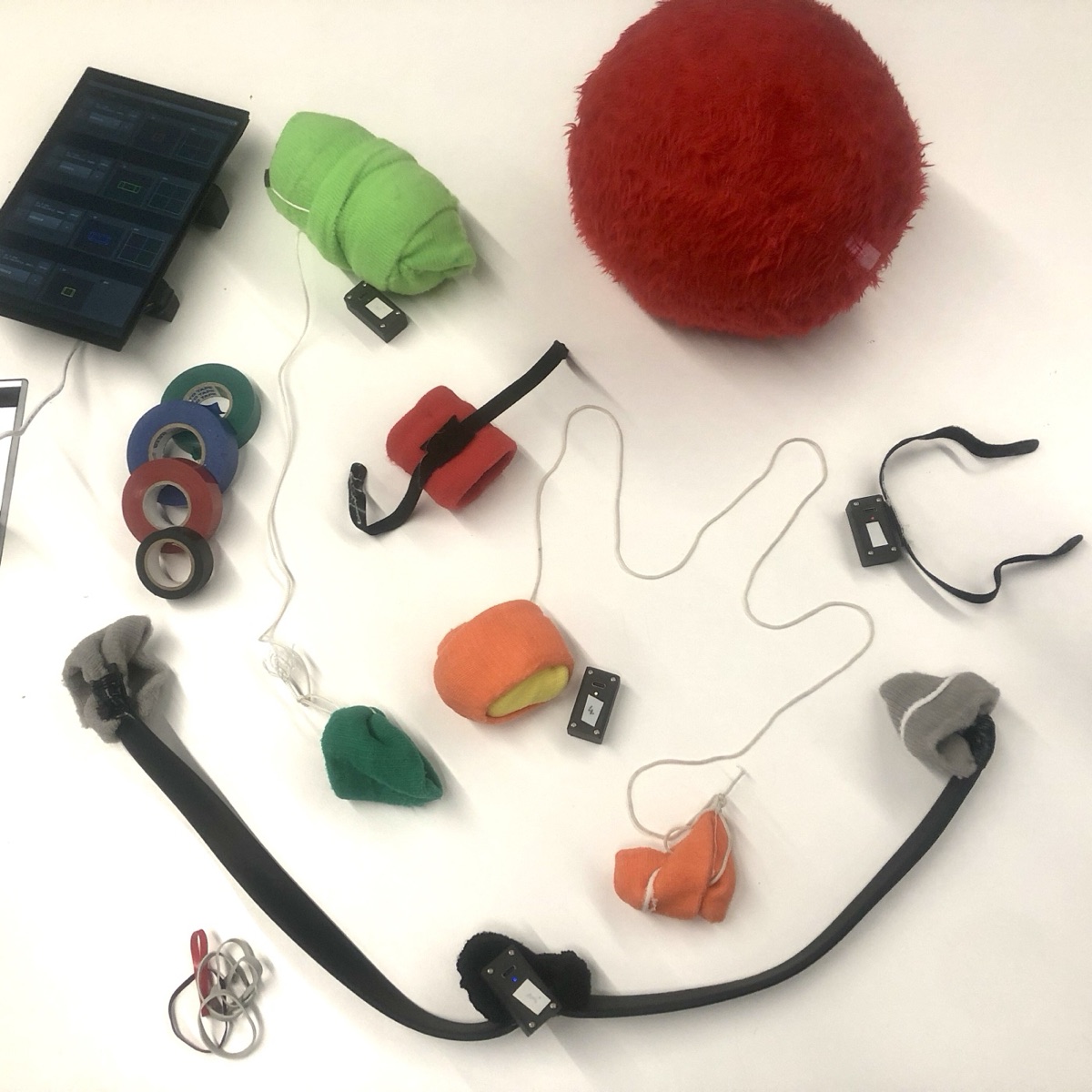
image: OHara & Ilsar, “The Sound Tree Project: Developing Personal and Collective Expression with Accessible Digital Musical Instruments”, NIME 2025 (CC BY 4.0)