Works by other people. One page each: what the thing is, and — where there is something to show — pictures of it.
They are grouped by which conversation made them — not by what they look like, but by who the maker was answering to, and therefore what each work can be used as. Every work sits in exactly one group. Some could sit in two, and the forced choice is the point; where the call was close it is stated on the group’s page.
Sources differ in kind with the group. Exhibited works are cited from the maker’s own site. Research prototypes are cited from the paper, and their figures are reproduced under the NIME proceedings’ CC BY 4.0 licence, credited per image. Scores are cited from the published score or its publisher, and are not reproduced.
Games
Made and discussed as games — screenless playground games, and commercial video and tabletop games. → field/game-studies
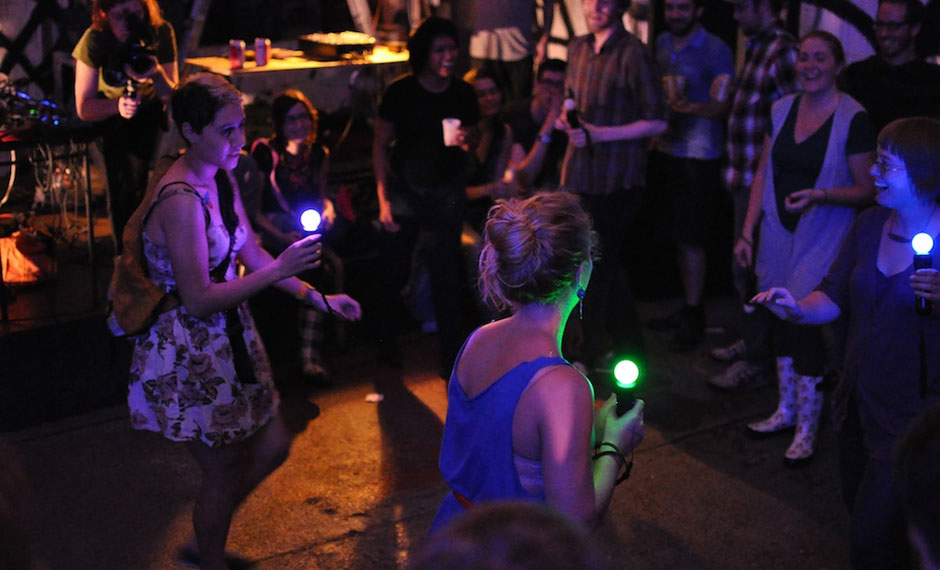
Johann Sebastian Joust
A no-graphics playground game for motion controllers, paced by Bach
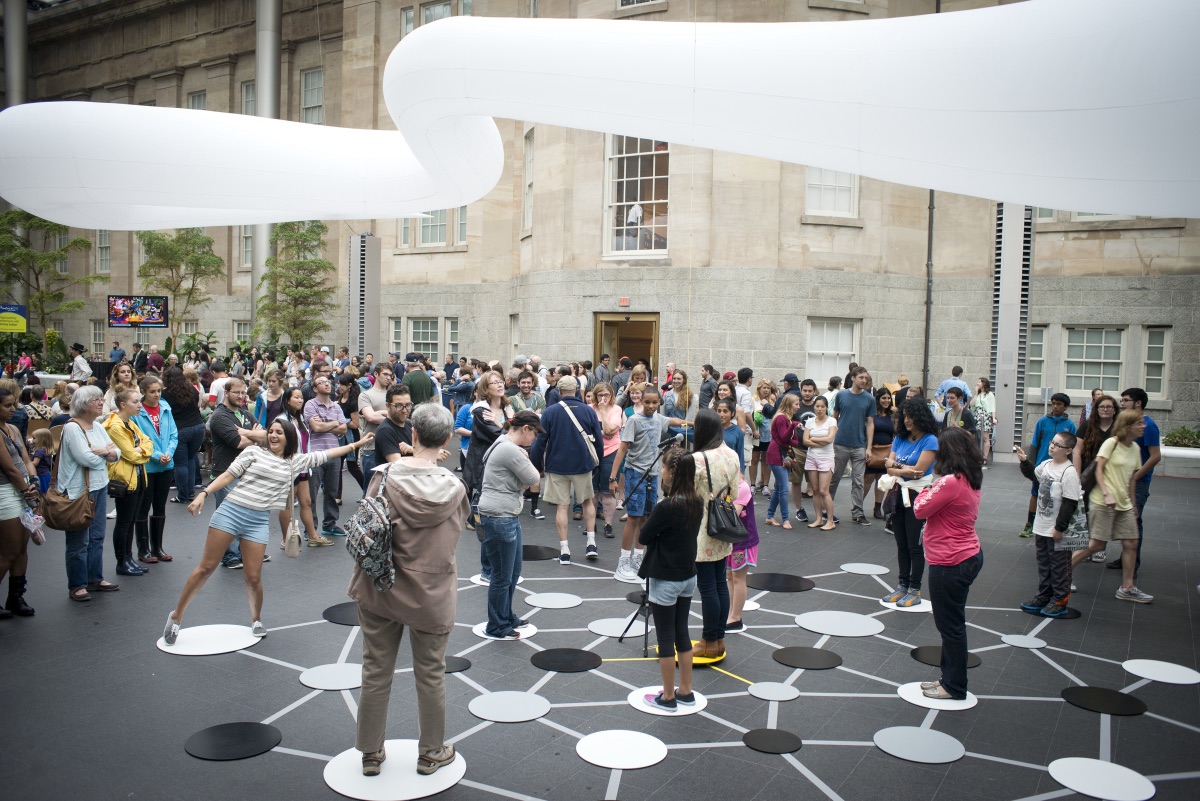
Starry Heavens
A large-scale installation that is also a political fable in the form of a game
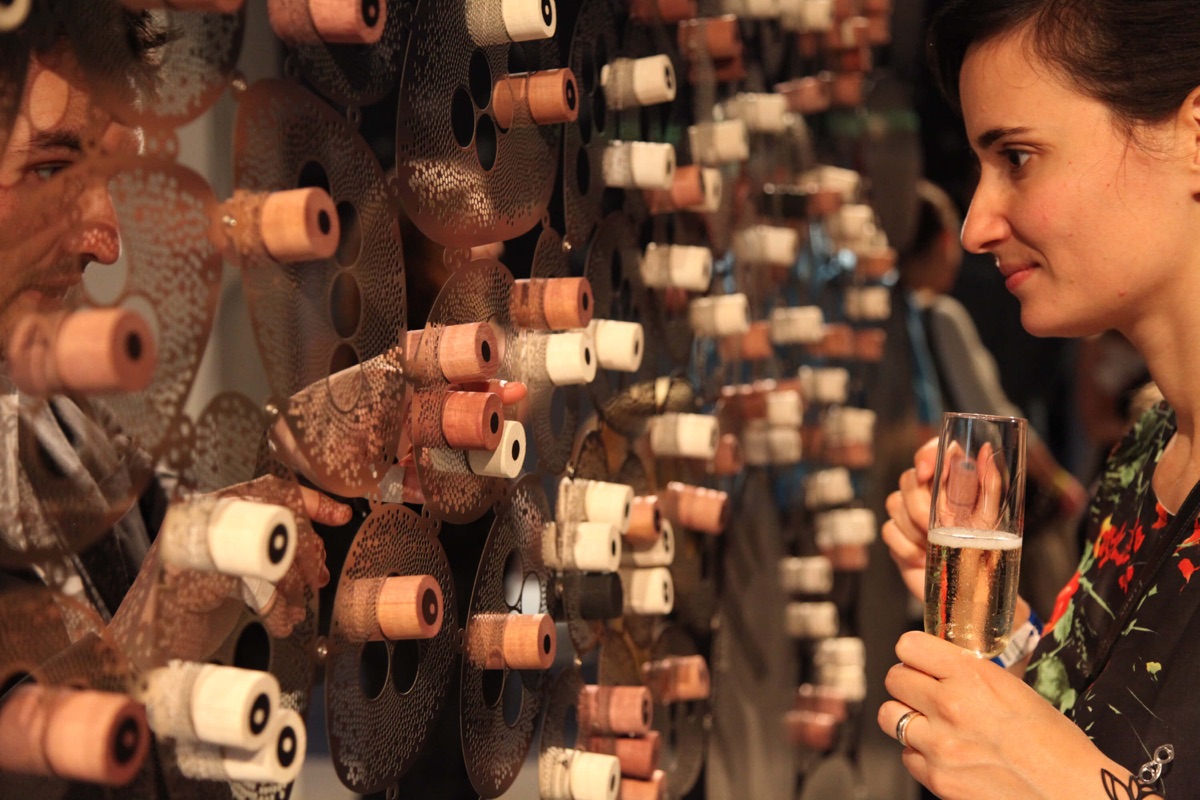
Interference
Two-player games on steel walls, where every move interferes with someone else’s
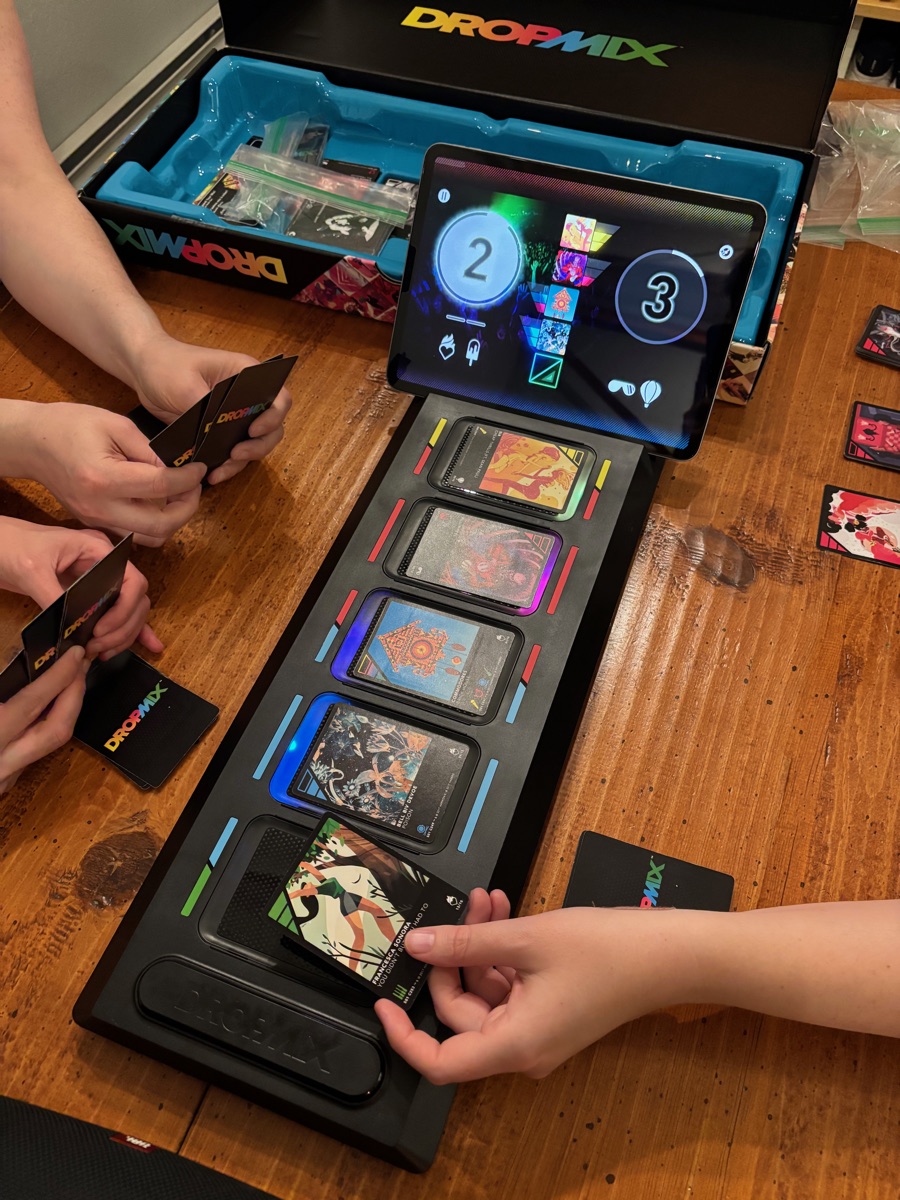
DropMix
Cards that drop stems of licensed songs into one mix that never stops
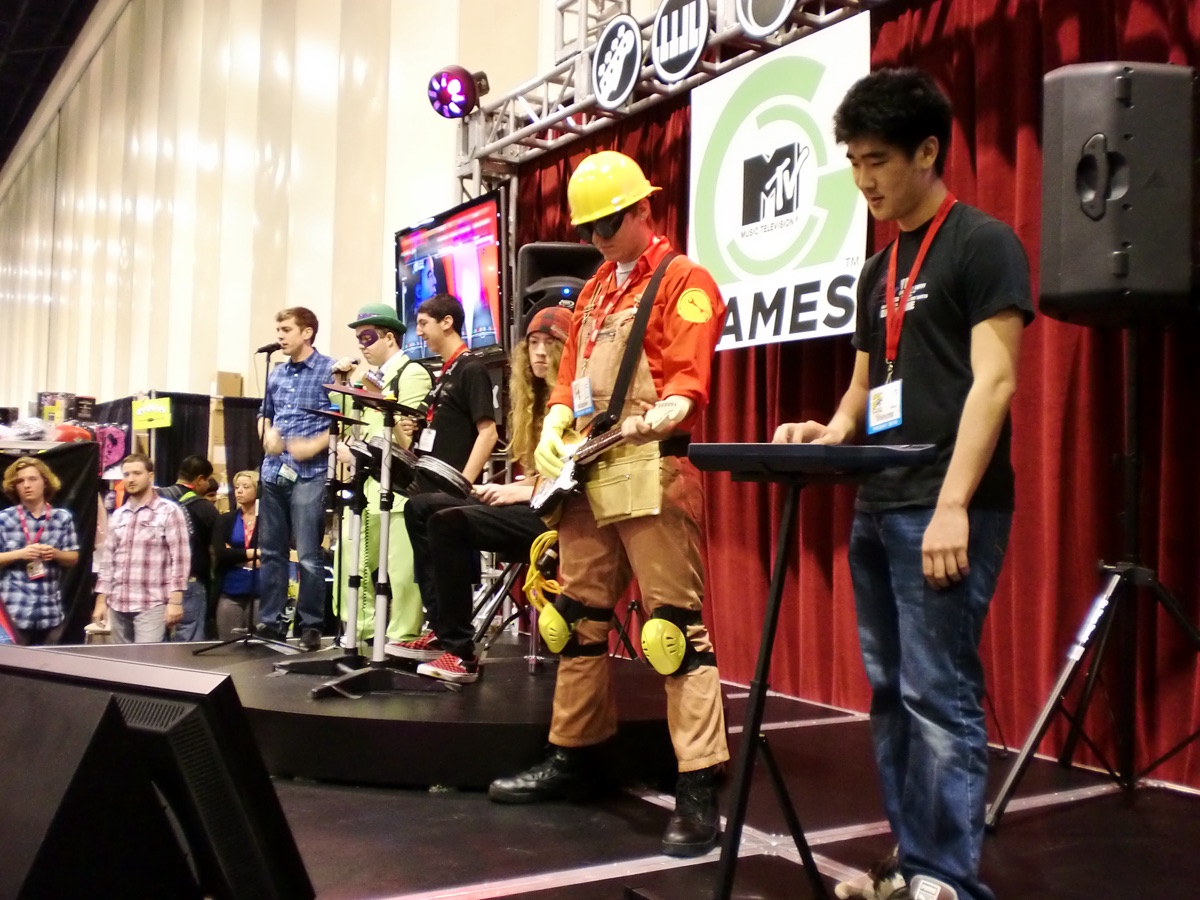
Rock Band
Four instrument parts on one meter, where reviving a failed player costs the rescuer their multiplier
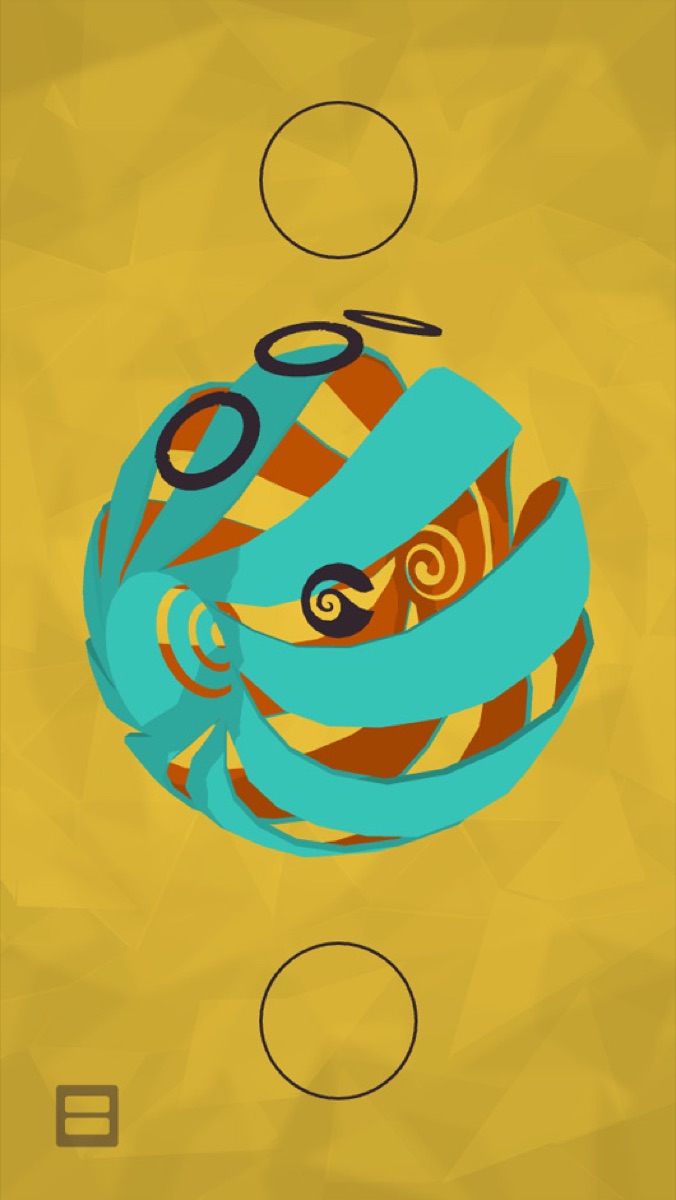
Bounden
Two people holding one phone, walked through a ballet by a path of rings
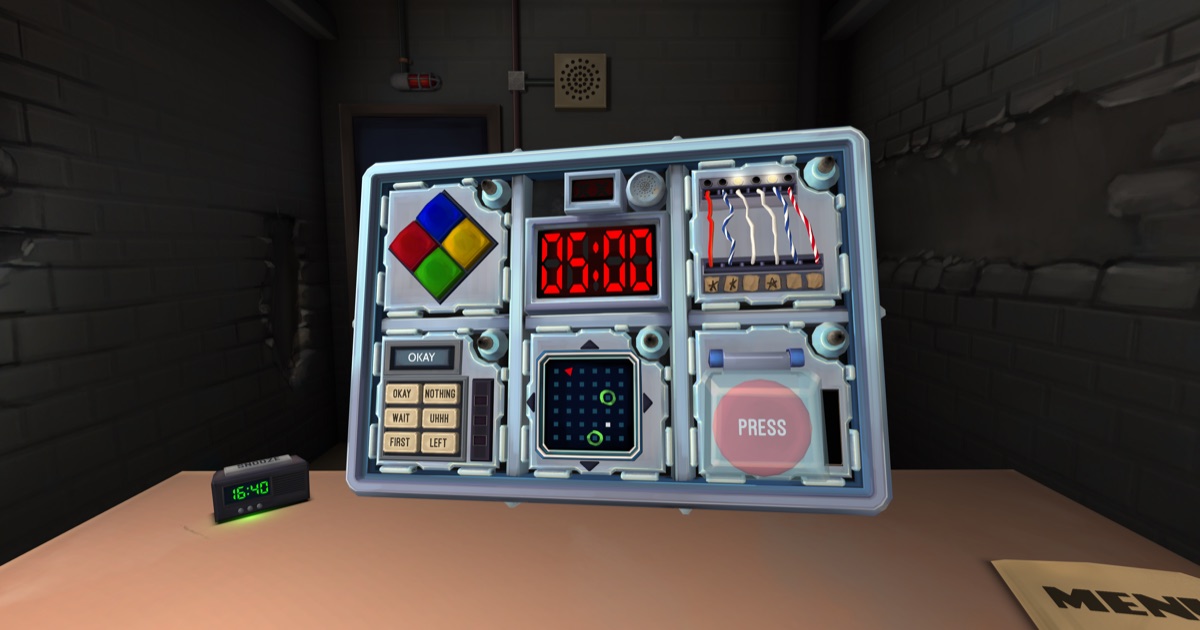
Keep Talking and Nobody Explodes
One player sees the bomb, the others hold the manual, and only speech connects them
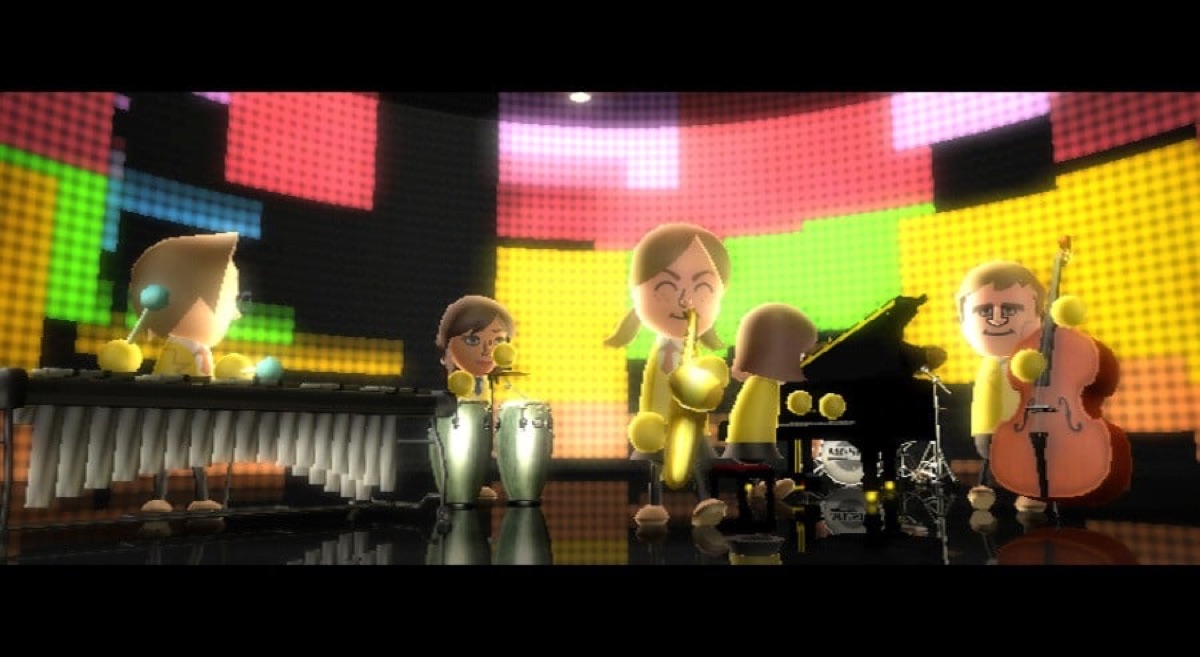
Wii Music
Four players, 66 instruments, no score and no way to play a wrong note
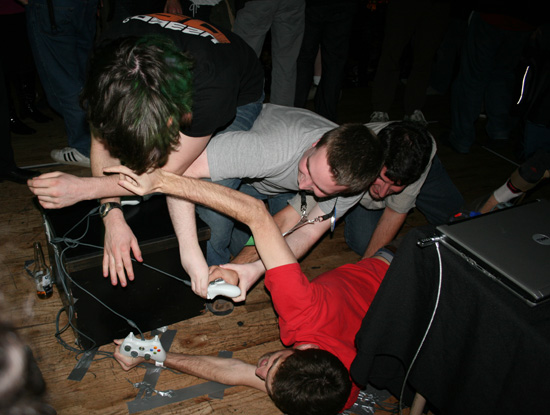
B.U.T.T.O.N.
A party game that cannot see the room, and so cannot enforce most of what it asks for
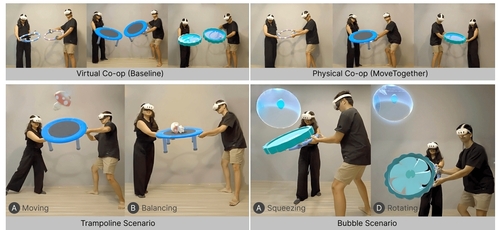
MoveTogether
Two players in headsets carrying one tracked object between them
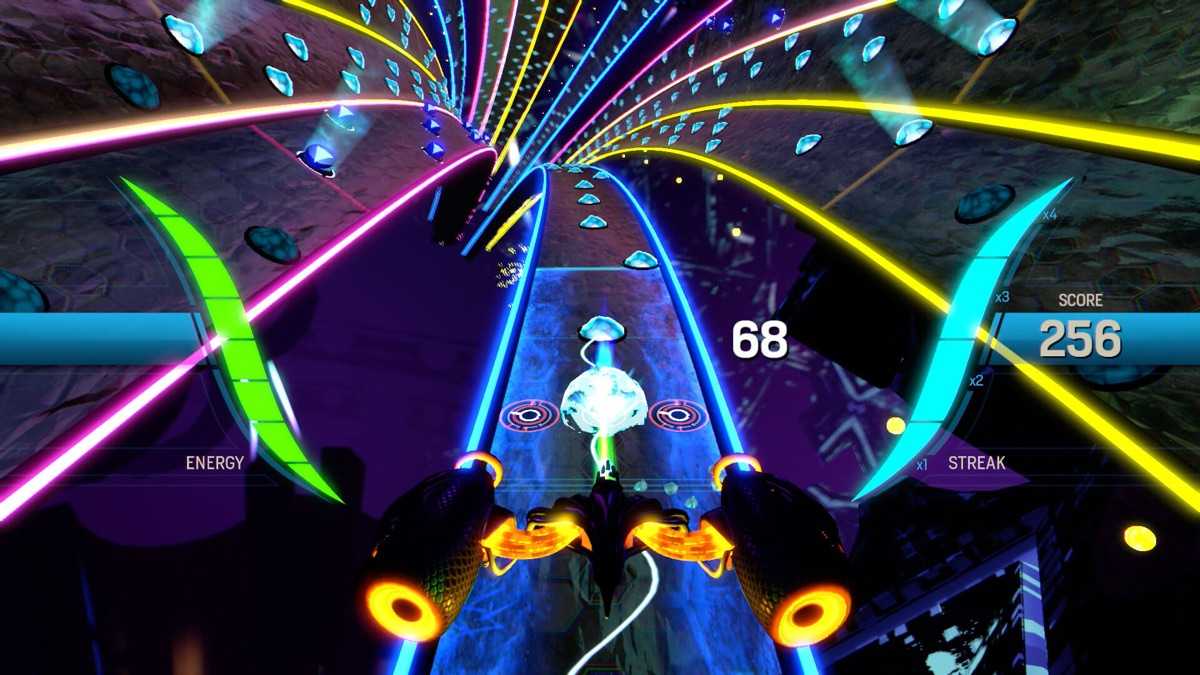
Amplitude
Six lanes, one instrument each; a captured lane plays itself while you leave it
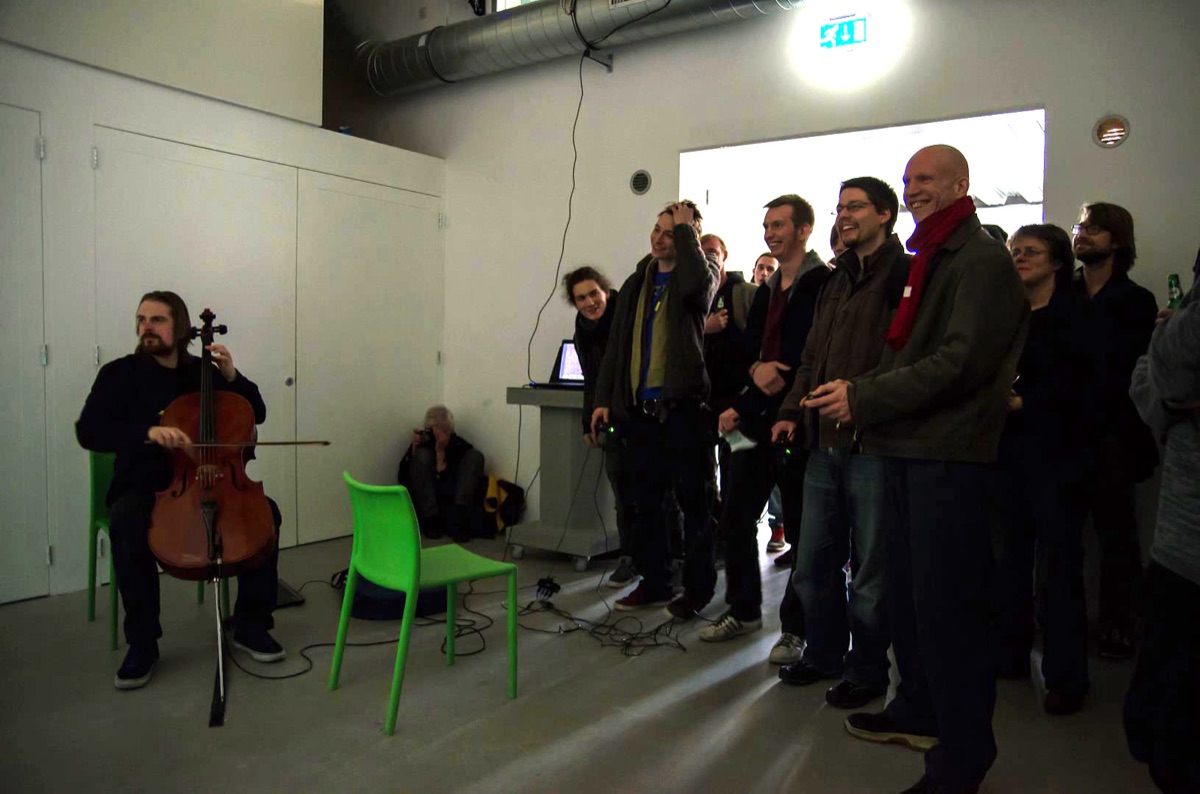
Cello Fortress
A cellist improvises a fortress’s defences while the audience attacks it with controllers
Experimental music
Made and discussed as composition. Every work here is a set of rules rather than a fixed part: a page of written instructions, or a piece of software the players run while they play. 2015 to 2025. → field/experimental-music
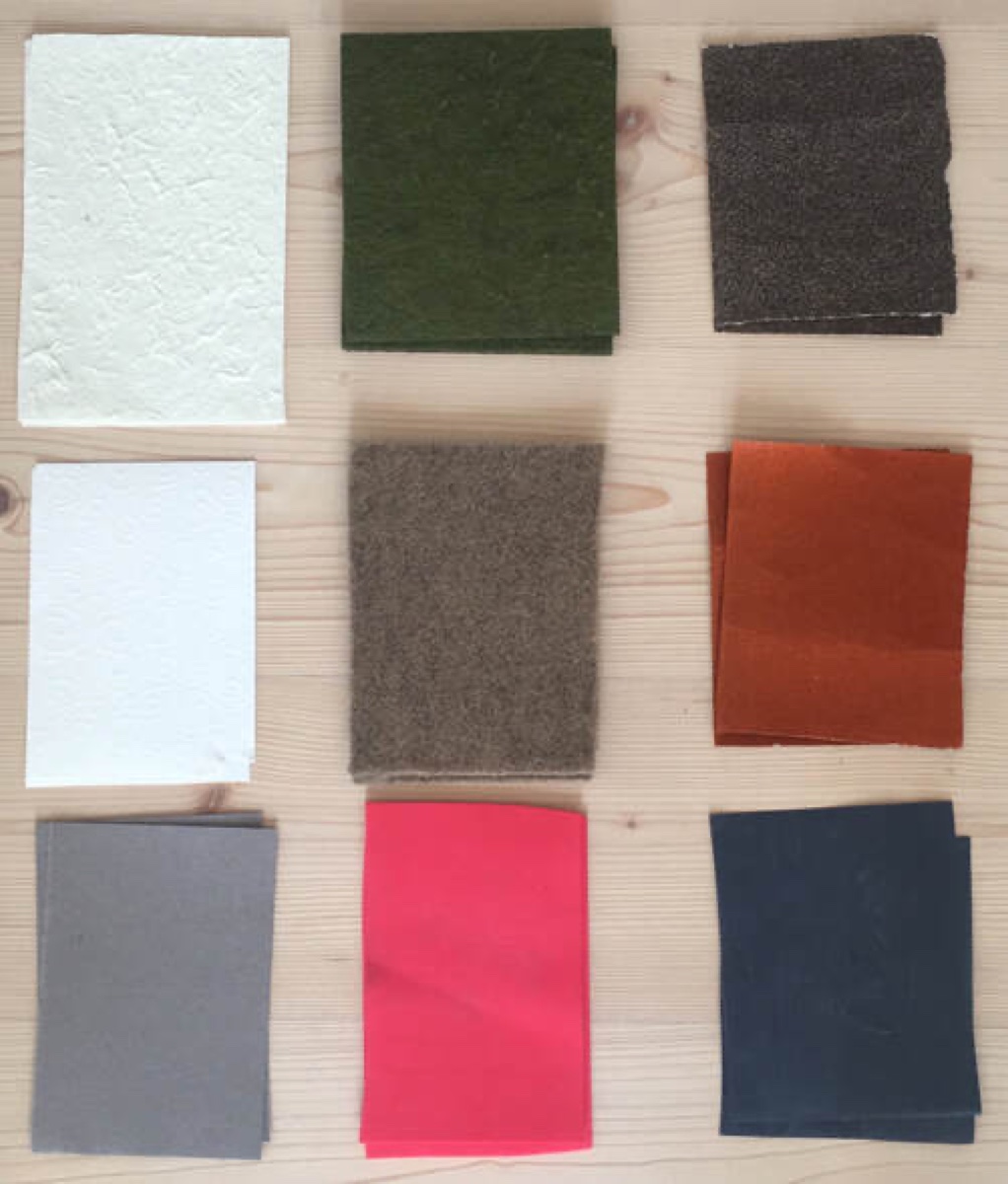
Tympanic Touch
Two performers compete under rules a computer scores and the audience never sees
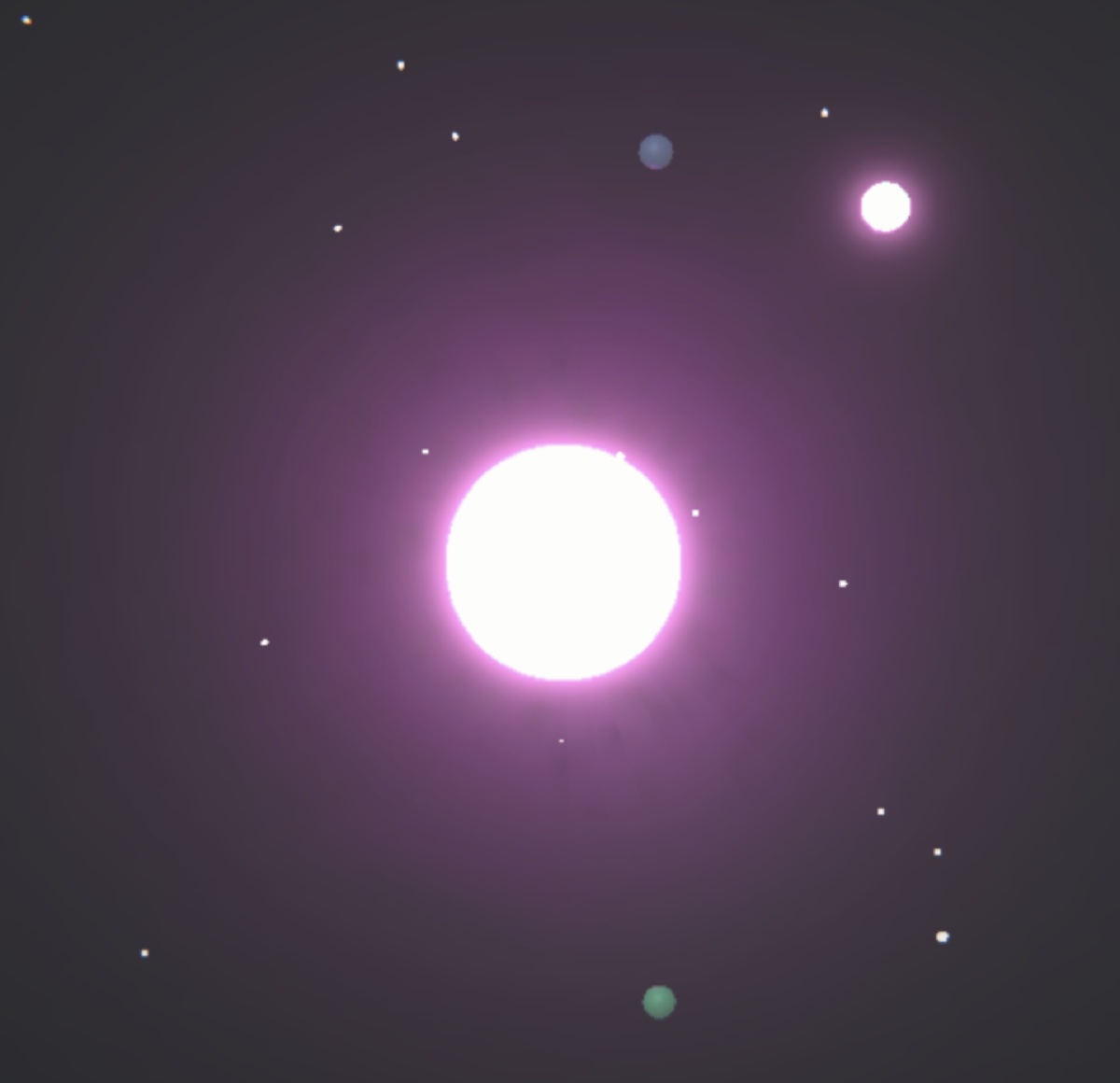
H3
Three players hold pulse, navigation and activation, and swap jobs mid-performance
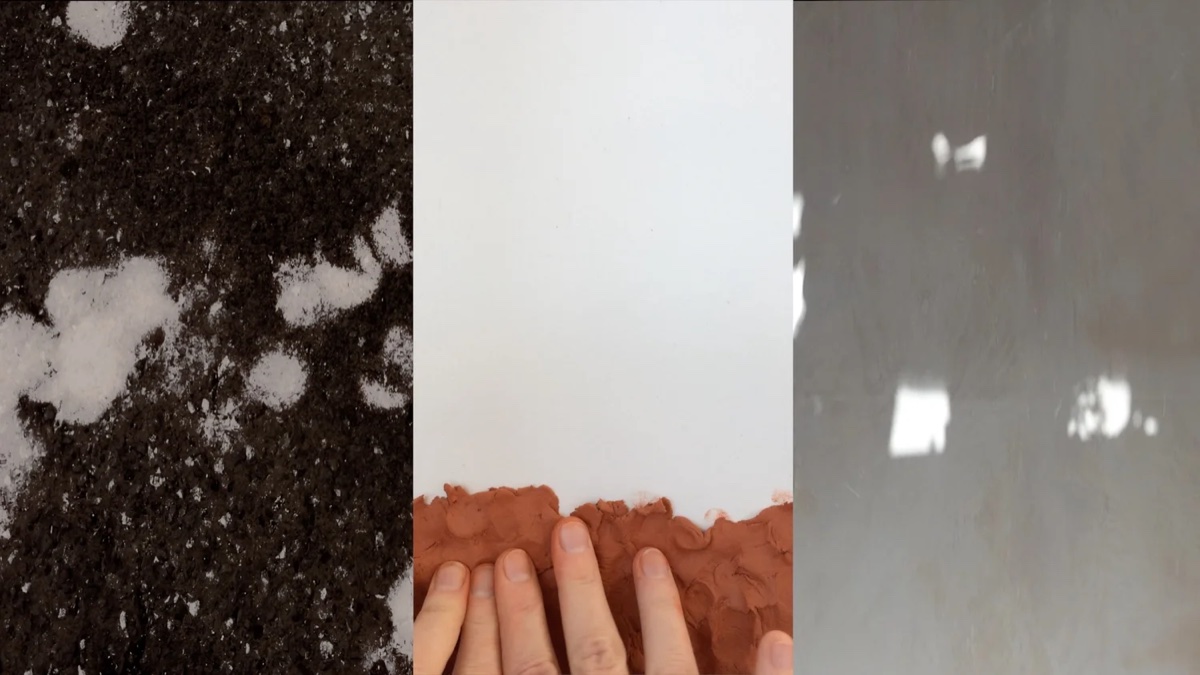
DECAY
A fifty-minute piece rewritten at every stop of a year-long tour
The other four are scores and software, with nothing that works as a photograph — each page carries the score itself, or the composer’s video:
- waiting for someone to do the thing you need them to do — James Saunders · 2023 · you may only sound when a particular other player’s sound stops, and nobody says who is waiting for whom
- it is the behaviour that a system tends towards and encourages… — James Saunders · 2020–21 · fifteen or more players call numbered cues aloud; you must answer your own, nobody has to answer yours
- one to one — Charlie Sdraulig · 2018–19 · one violinist, one audience member, fourteen minutes
- Frontier — Paul Turowski · 2015 · an ensemble flies one spaceship, which follows the average of everyone’s pitches
Five historical scores that stood here until 2026-09-22 — Cardew’s The Great Learning Paragraph 7, Riley’s In C, Wolff’s For 1, 2 or 3 People, Oliveros’s Sonic Meditations and Zorn’s Cobra — are archived in the repository with publish: false.
Instruments
Built as instruments or musical interfaces and published as papers, mostly at NIME, so each comes with a method and findings. Twenty-two years, 2004 to 2026. → field/music-hci
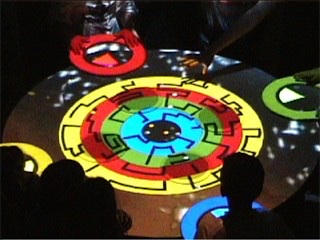
Jam-O-Drum
The round table with no head, and the ancestor of most of this group
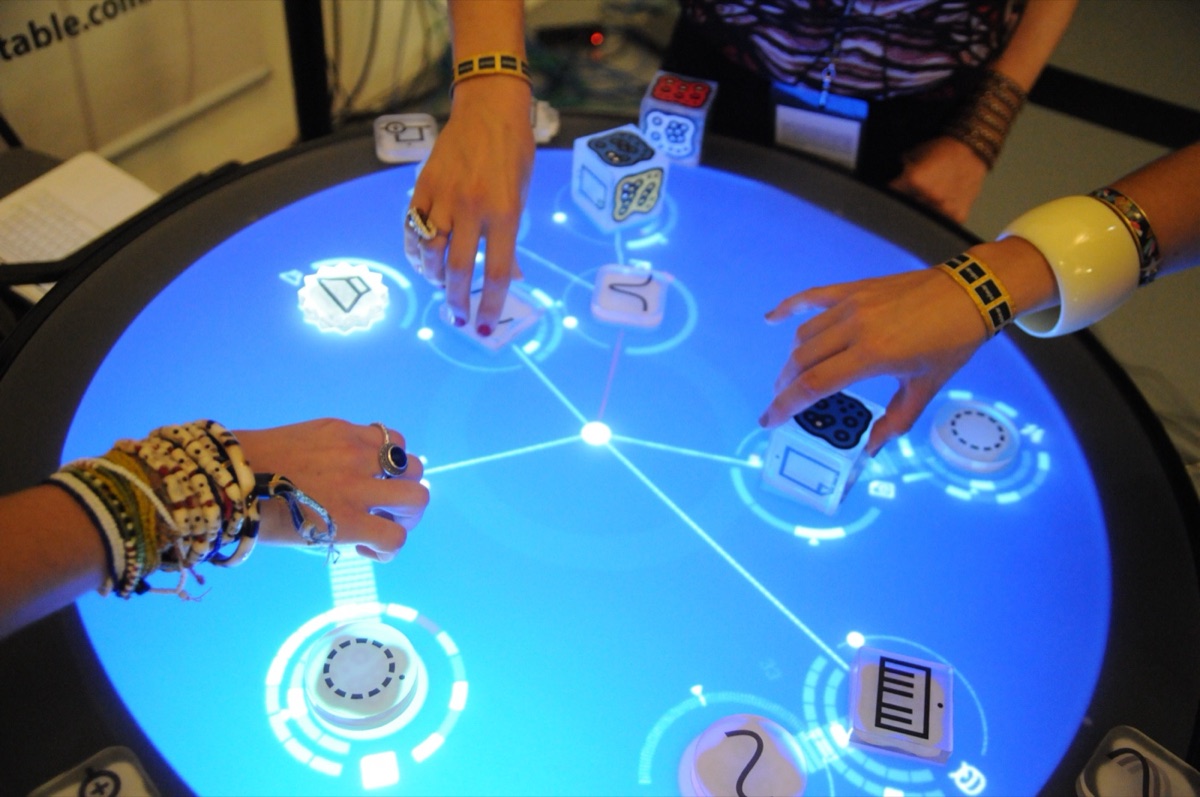
reacTable
A round table where several people build one synthesiser together
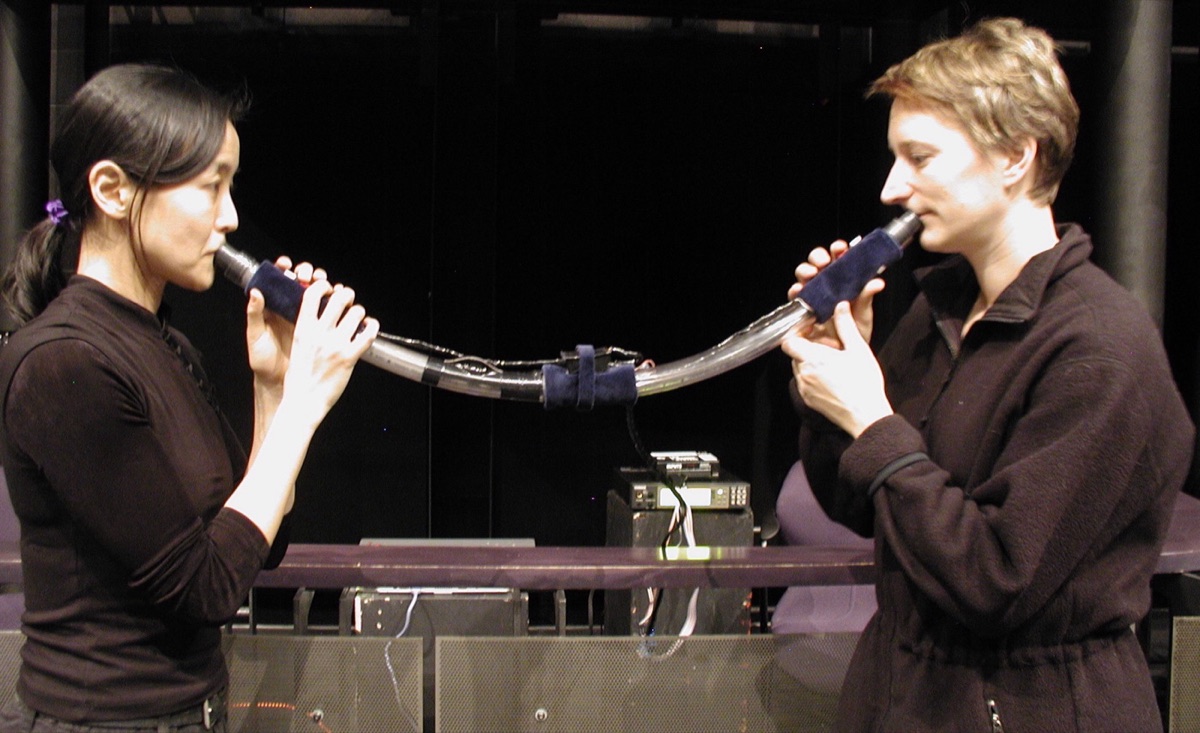
Tooka
A tube instrument that cannot be played alone — one player at each end
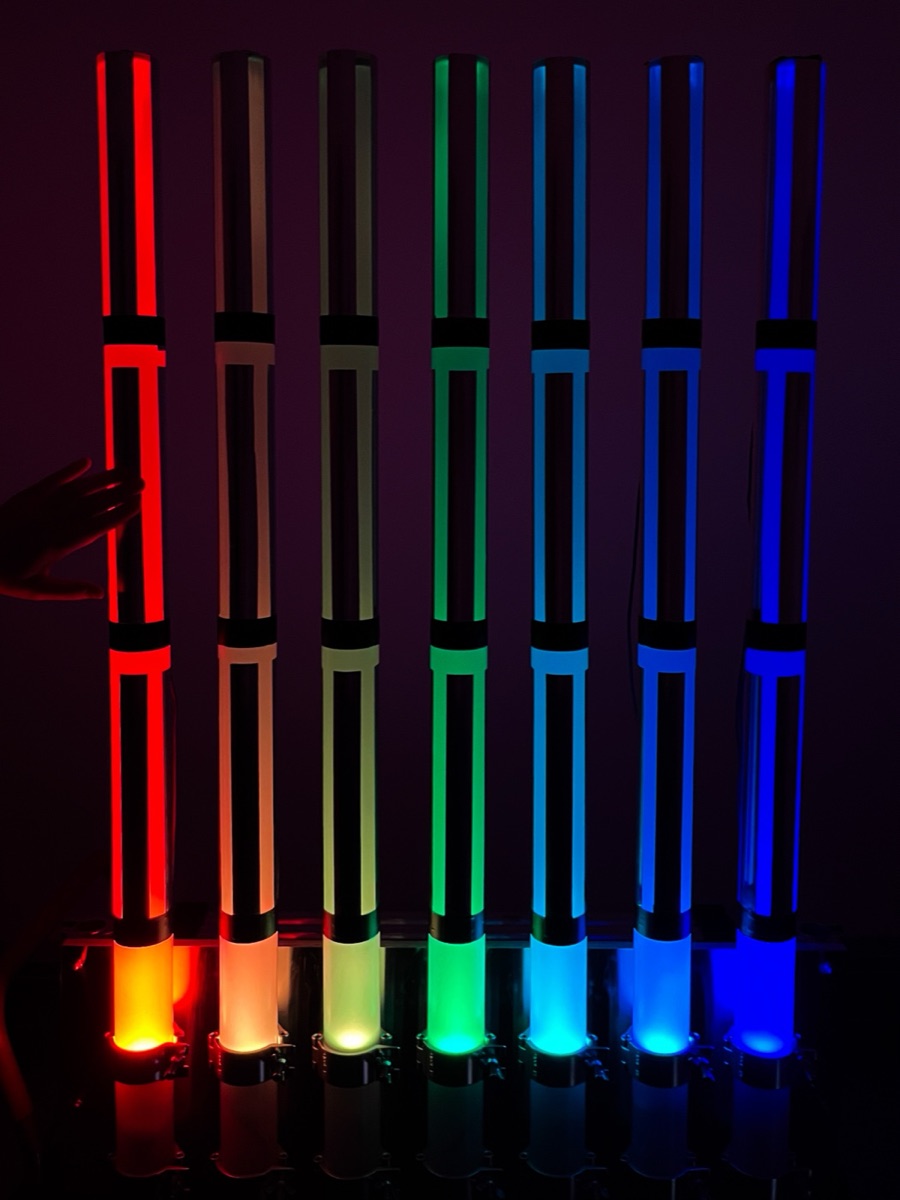
Tubularium
Seven glowing tubes that let people with no training play in key
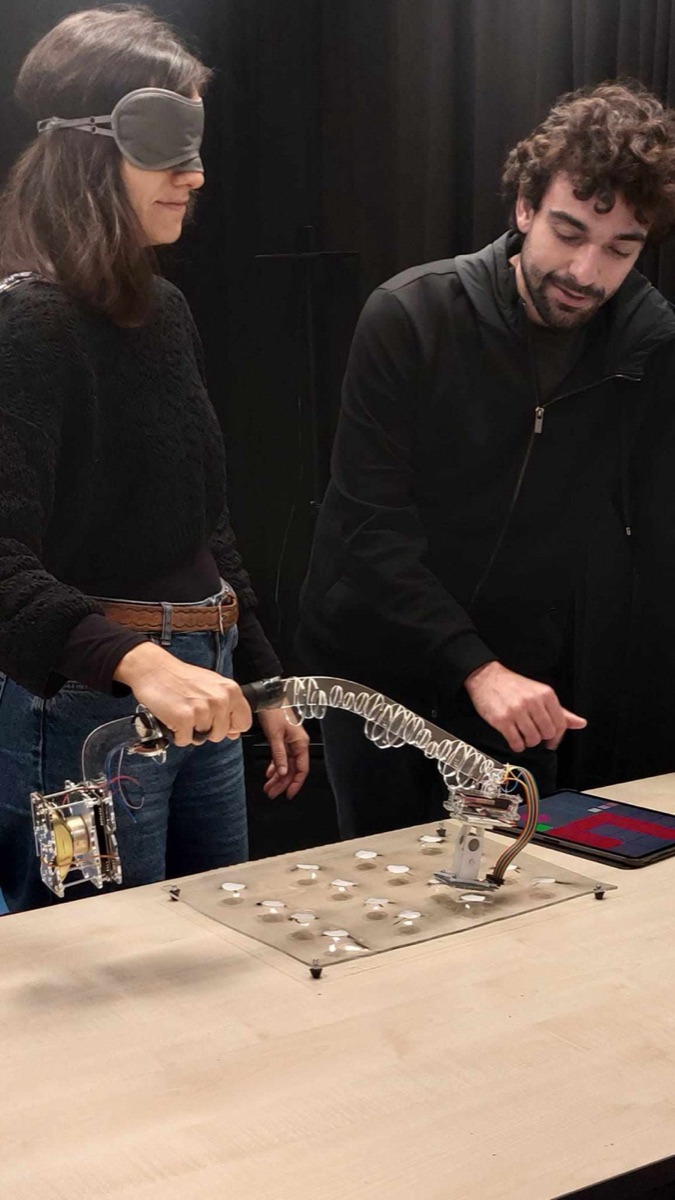
MusiCane
An instrument shaped like a white cane, borrowing a skill its players already have
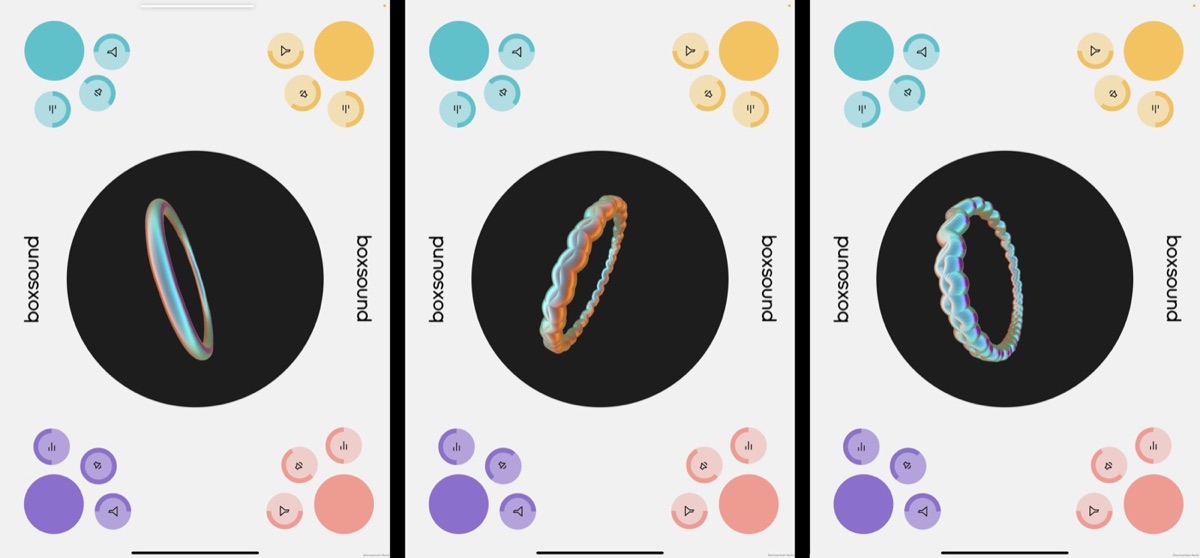
boxsound
A tablet app co-designed with autistic children, played from four corners at once
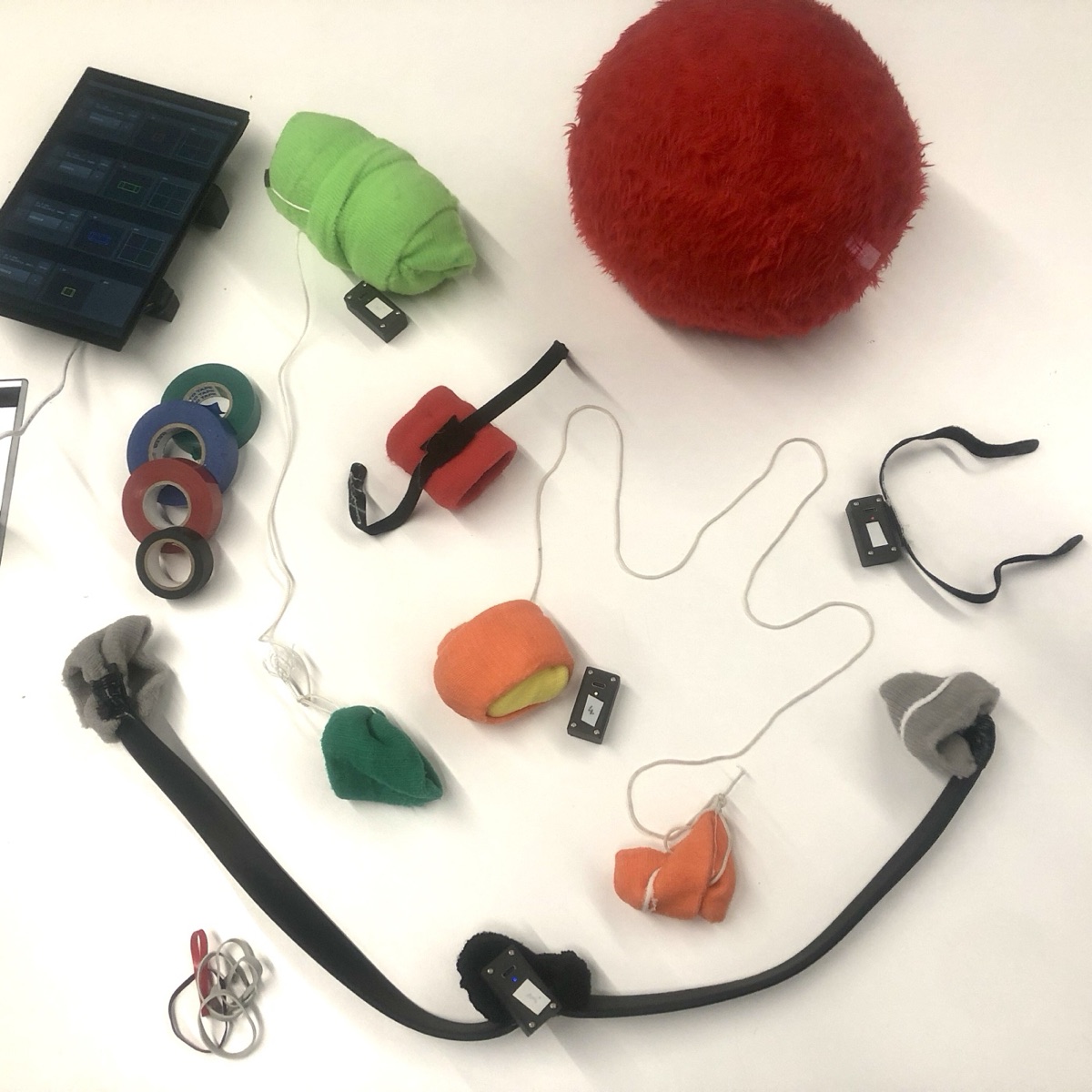
The Sound Tree Project
Motion sensors sewn into personal objects, built with five performers over six months
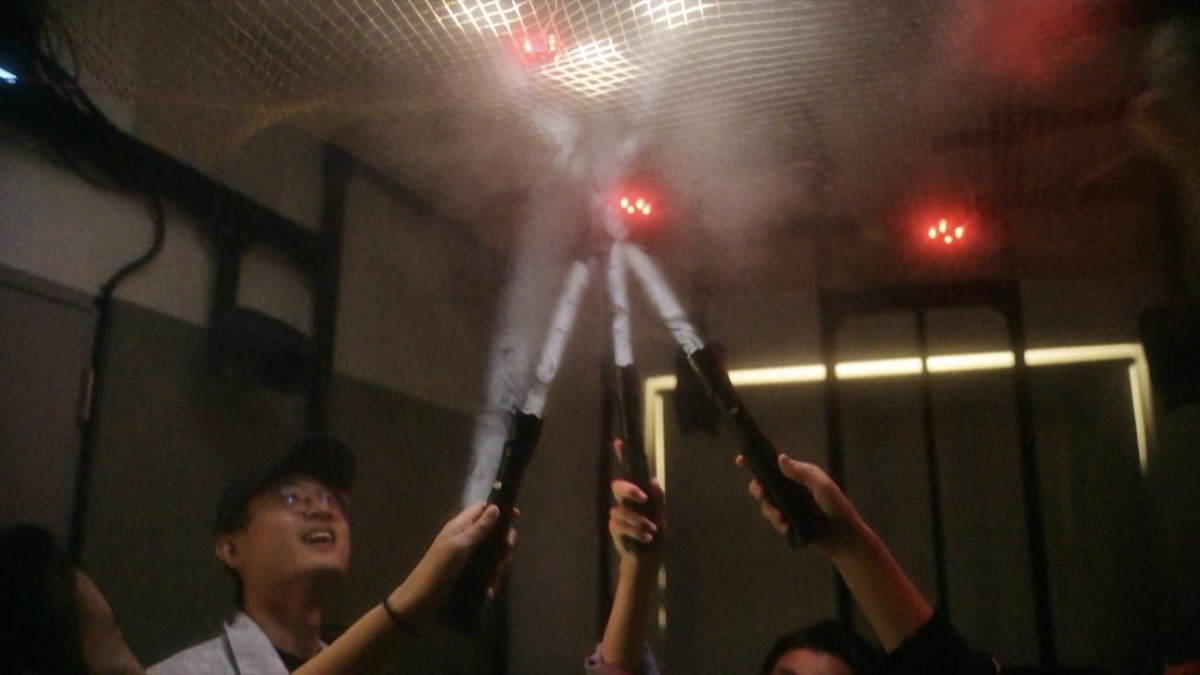
SampleRate
Torches strobing in subdivisions of one tempo, played against a ceiling of light sensors
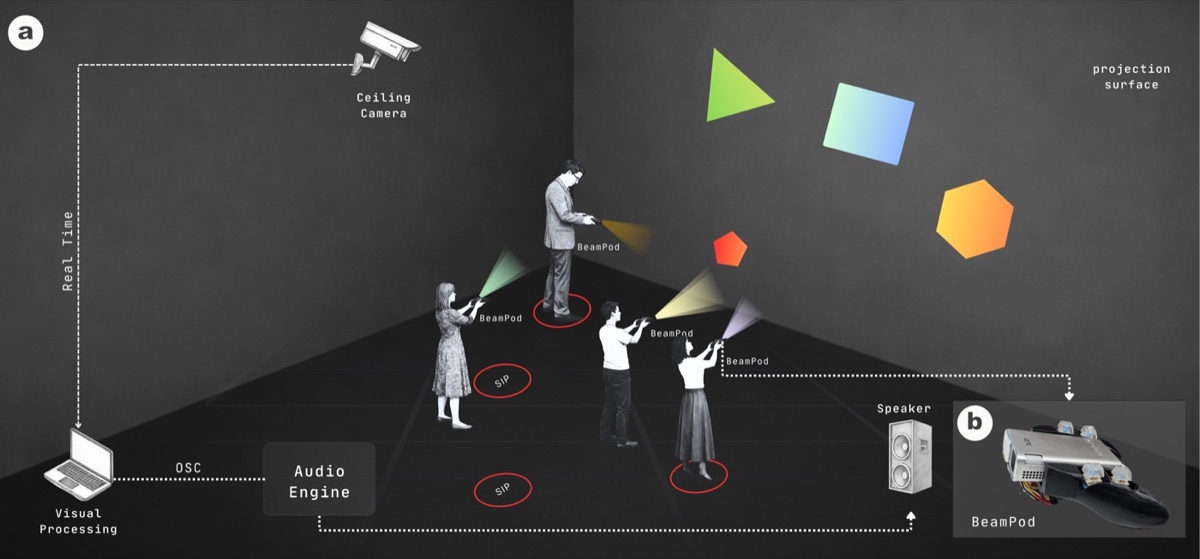
Projected Geometry
Handheld beamers whose pitches converge when people stand in the same zone
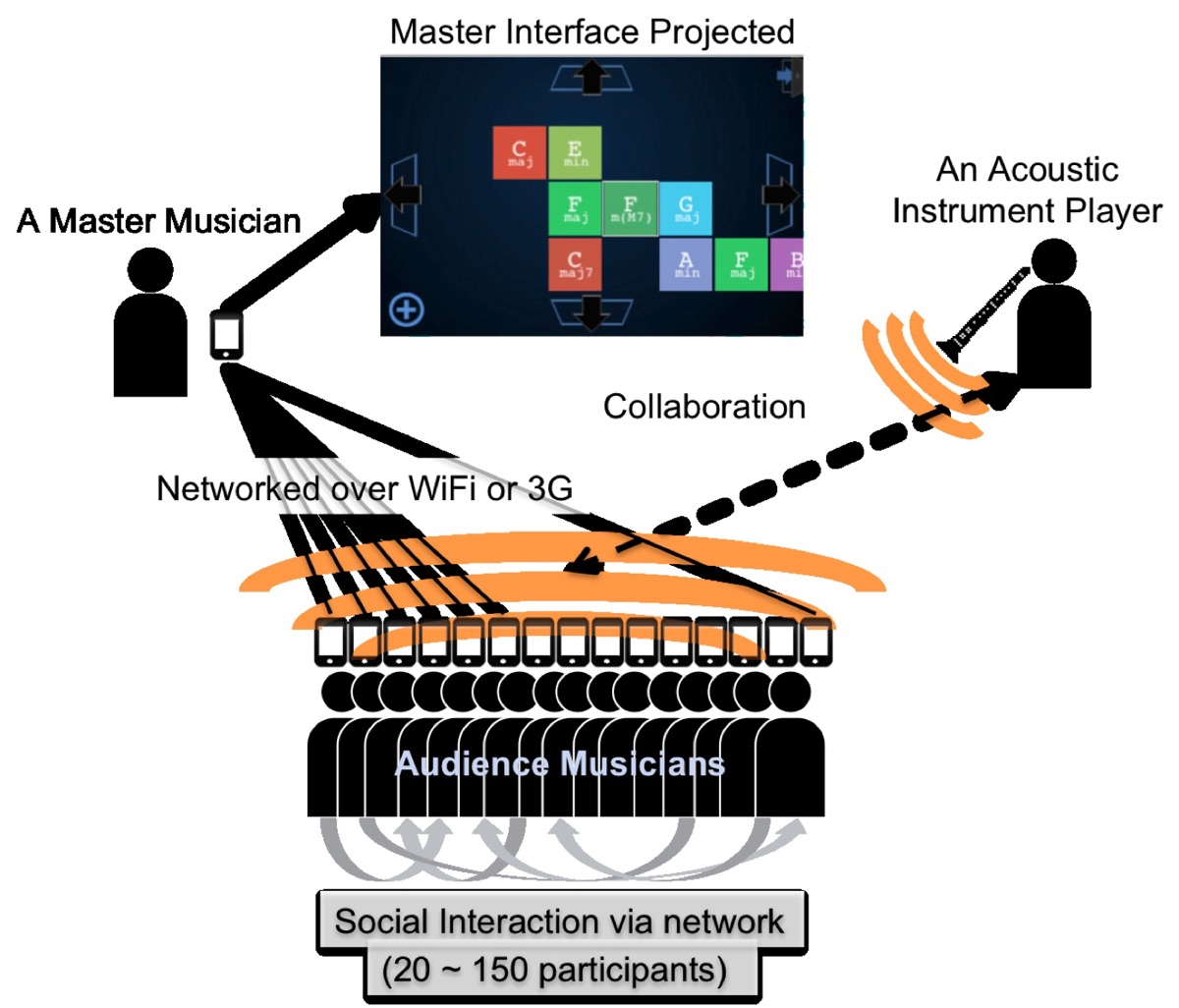
echobo
Up to 150 audience phones, held in key by a master musician on stage
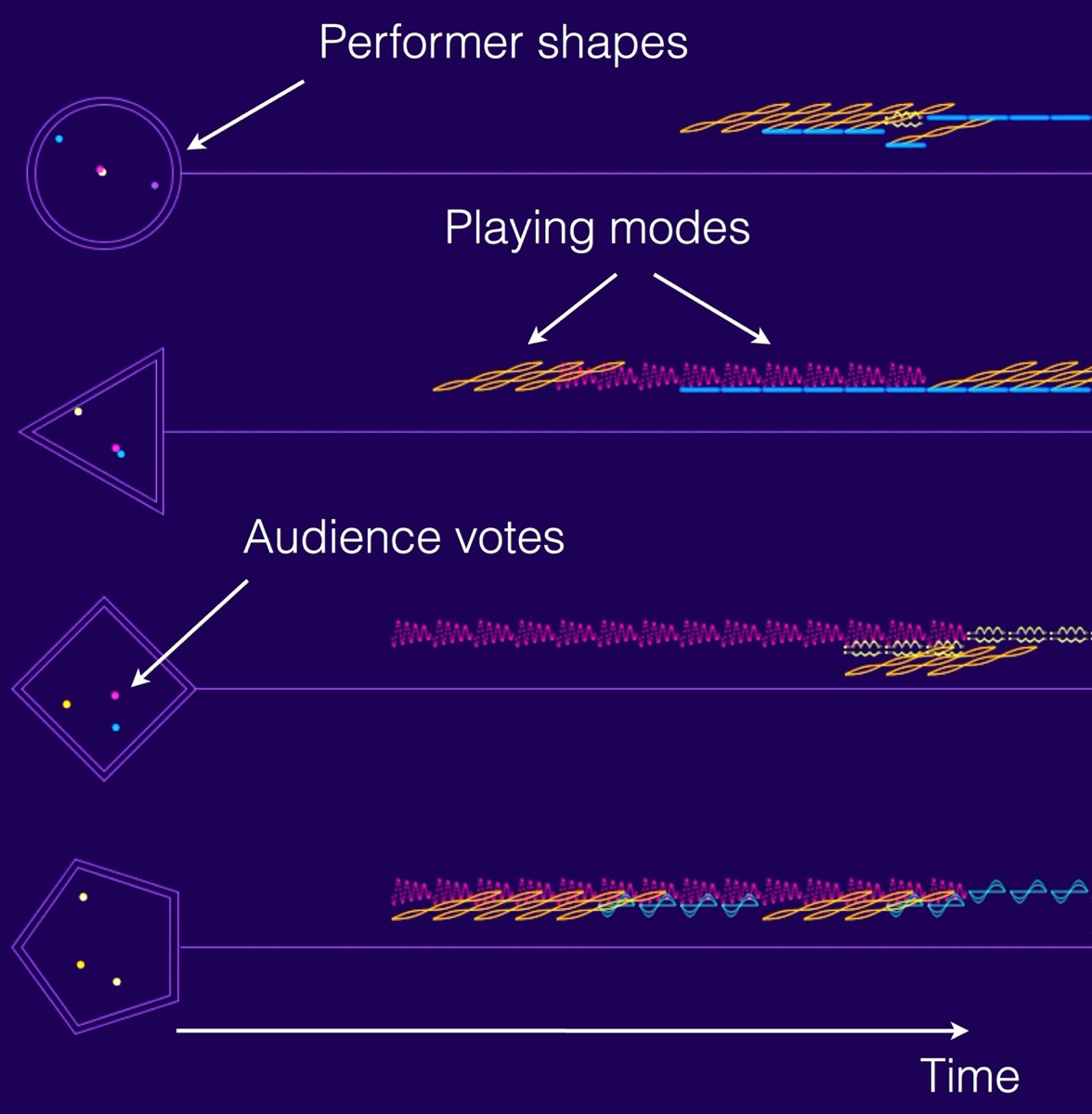
Open Symphony
The audience votes, and the votes become a live score the performers read
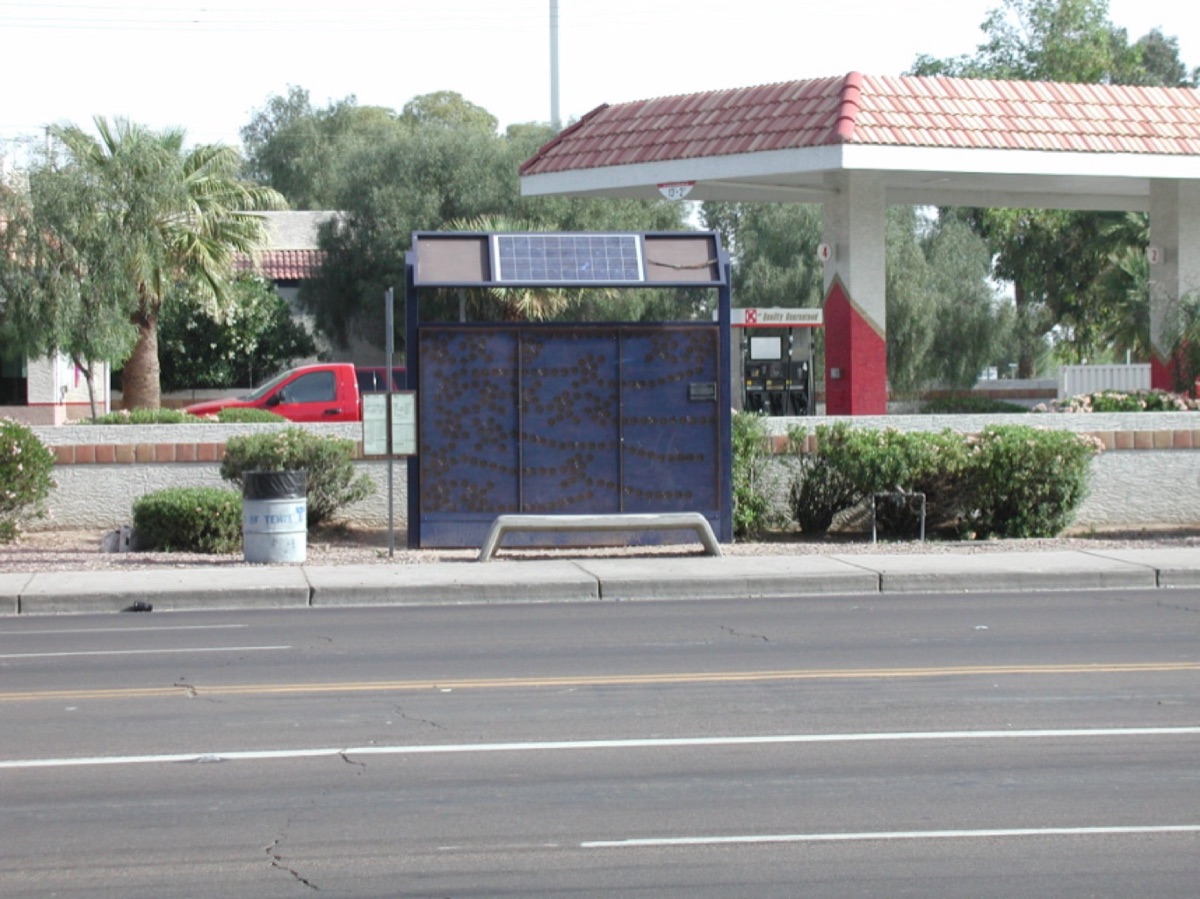
Transition Soundings
A solar-powered sound wall at a bus stop, played by whoever is waiting
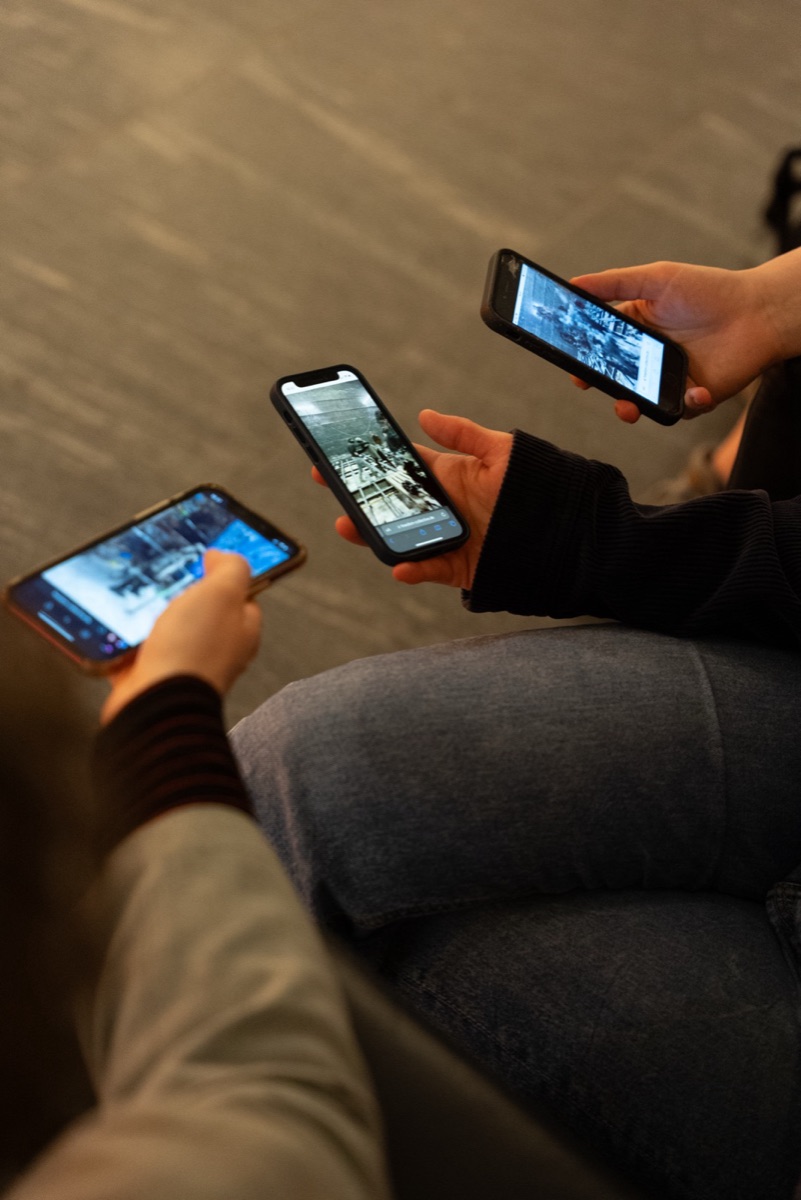
We’re in this together
A solo performance that uses the audience’s phones as a distributed sound field
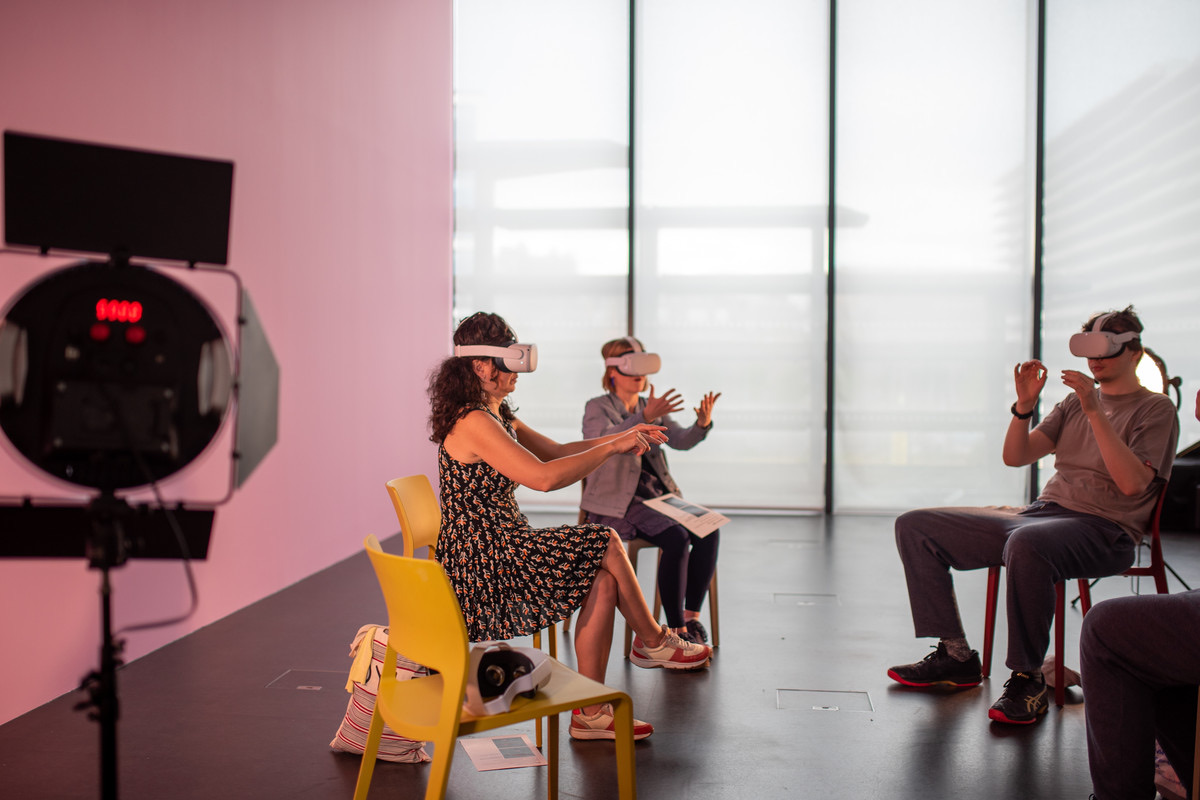
Sound of Light
Strangers make sound with their bare hands, anonymous and unable to speak
Installations
Made for exhibition and judged by a public. Design precedents, not academic evidence — none carries a formal user study, and what is known about how people behaved comes from the makers’ own accounts. → field/interactive-art
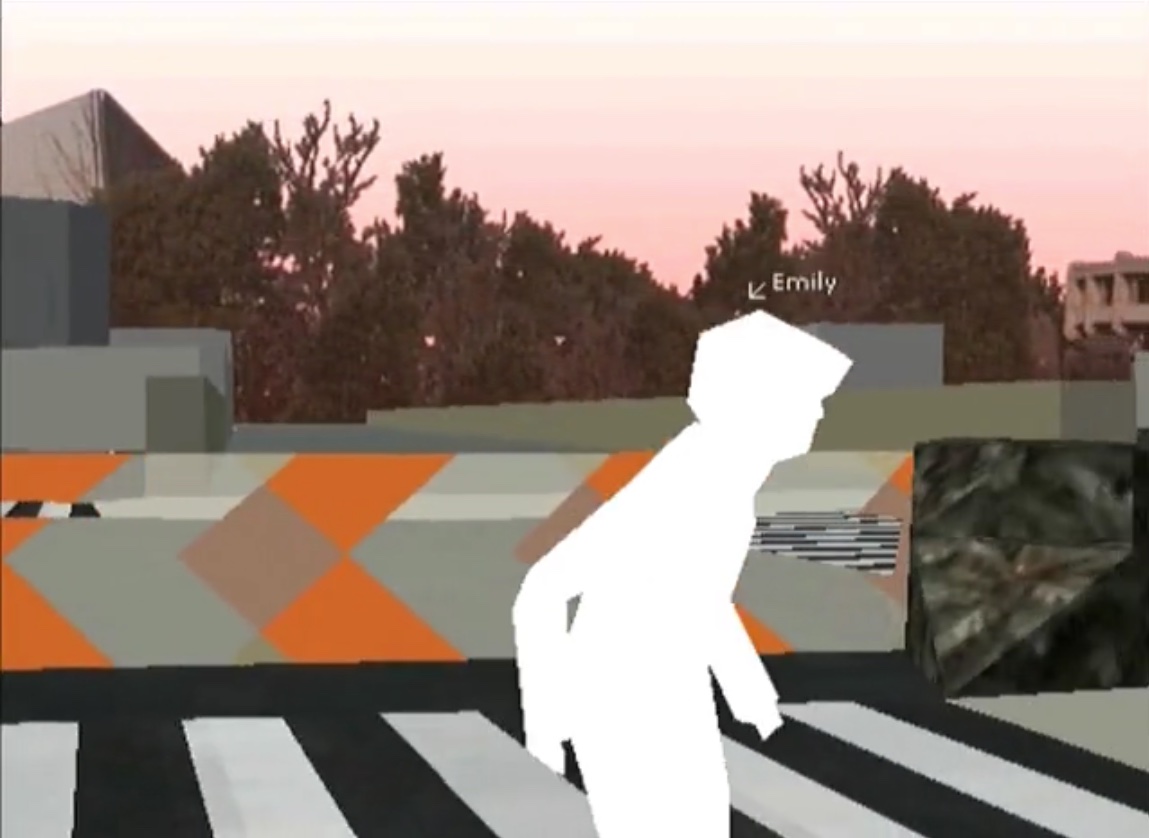
Can You See Me Now?
A game of chase played online and on the streets at the same time
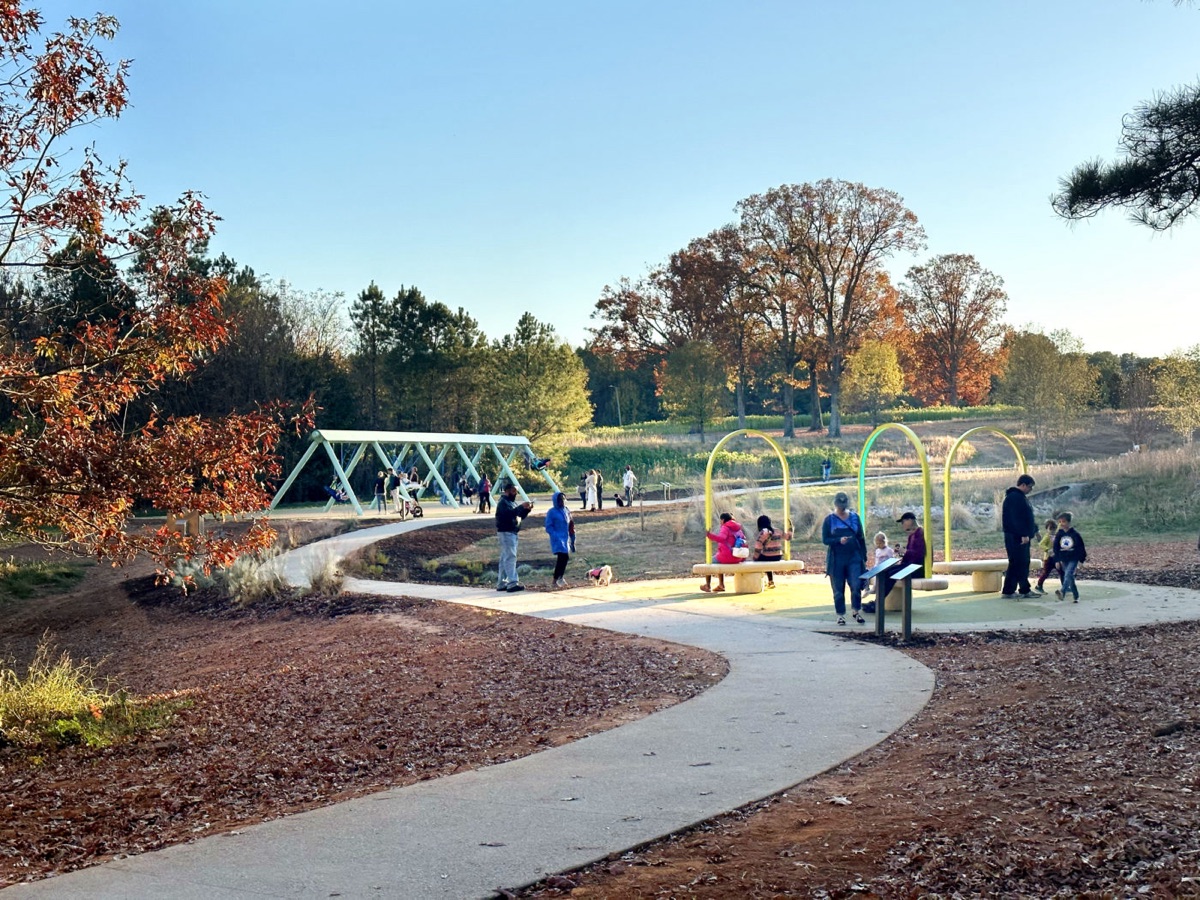
Musical Swings and Daydreamer
Swings and rocking benches that make music when people move together
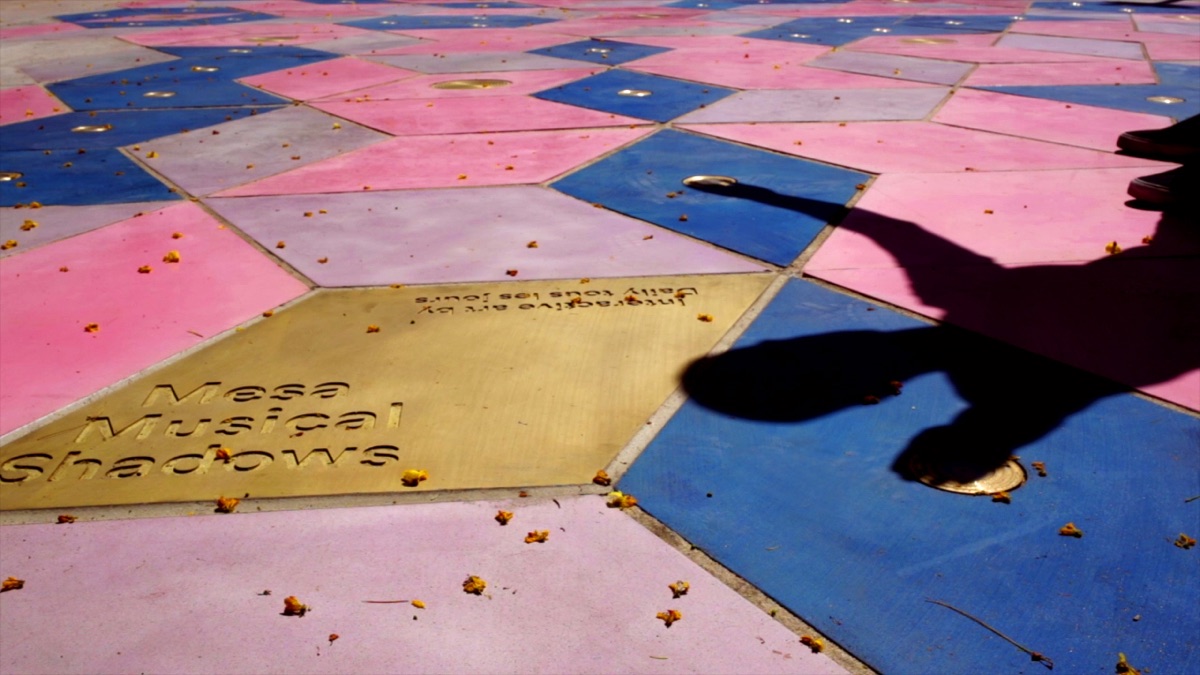
Musical Shadows
Pavements where the sun and your body together decide what is heard
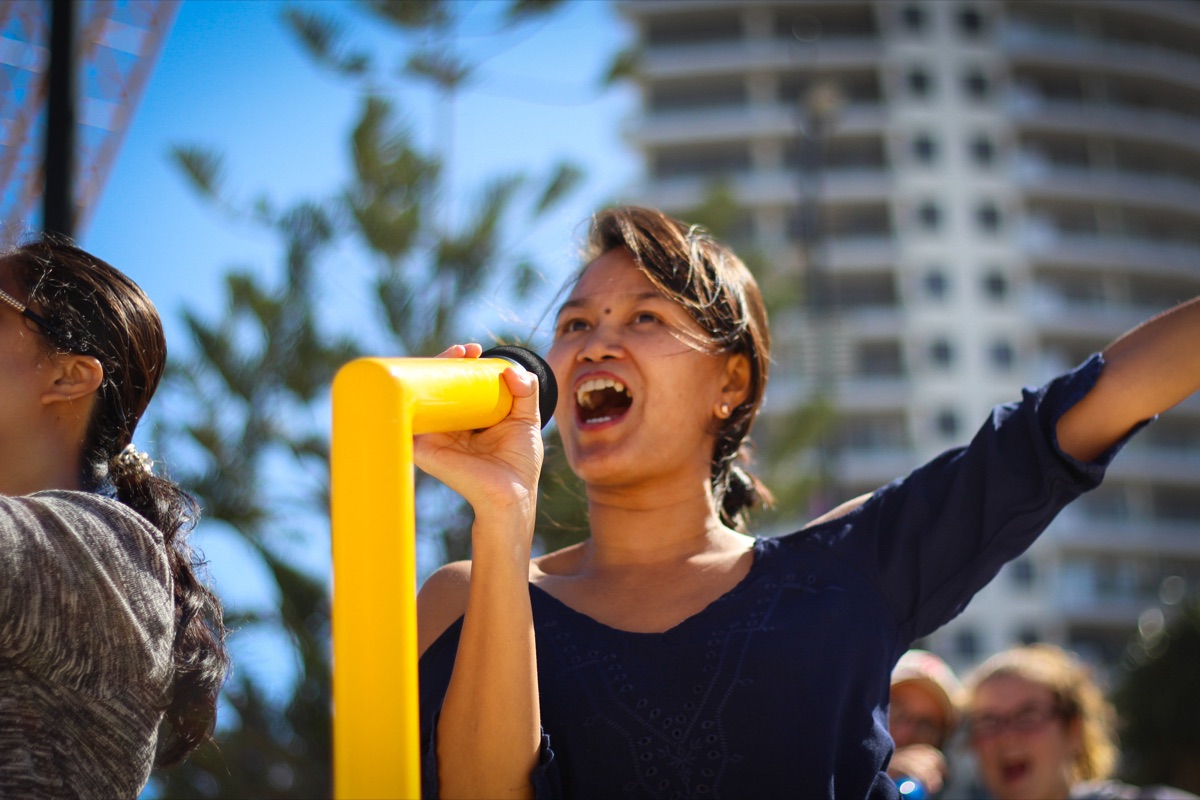
Giant Sing Along
A field of microphones that lightly auto-tunes strangers into a choir
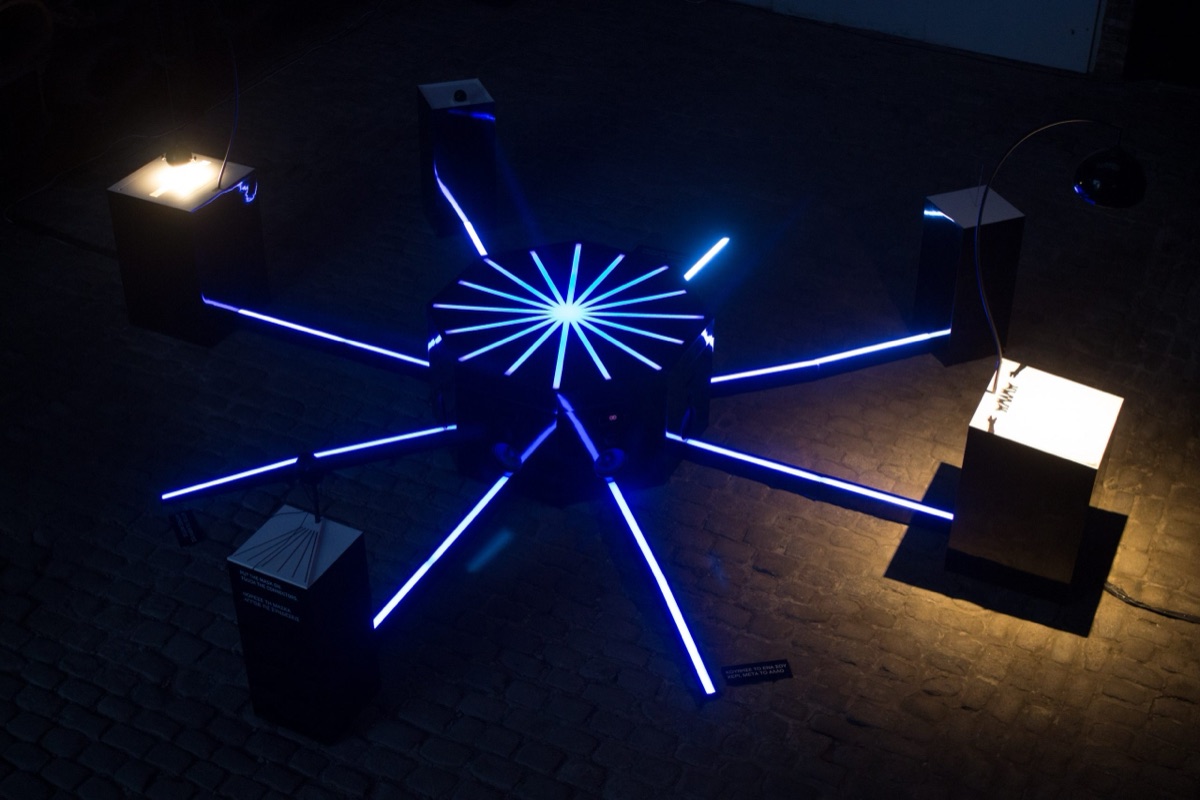
Cave of Sounds
Eight hacked instruments in a circle, played together by people with no musical training